- Vintage
- 2024
- Region
- Málaga / Spain
- Grape
- Muscat of Alexandria
- Type
- sweet
- ABV
- 11%
- Volume
- 37.5cl
- Aging
- No Ageing
- Production
- Traditional
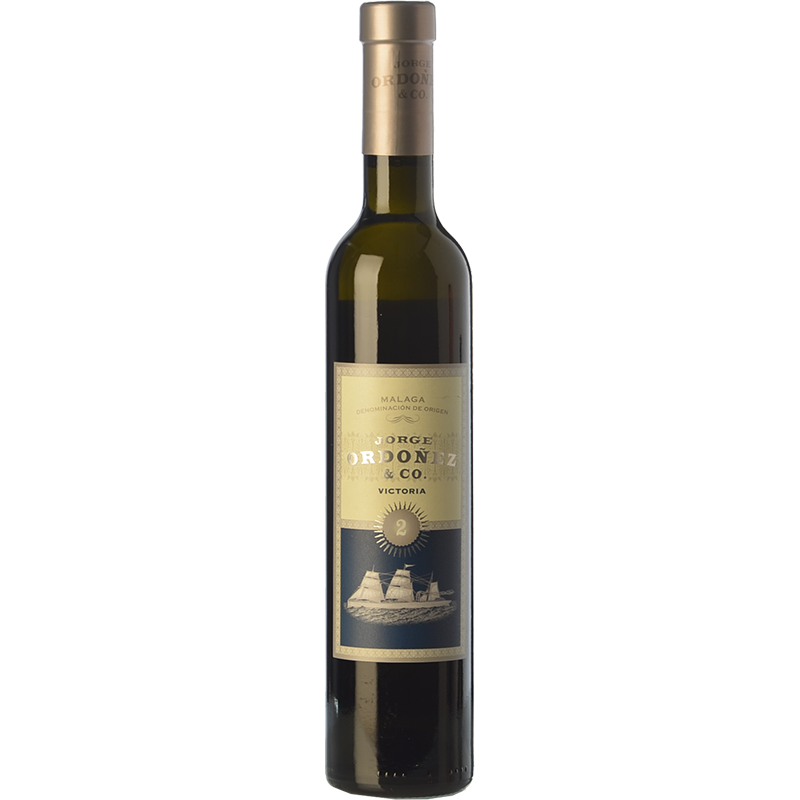
Jorge Ordóñez Nº 2 Victoria · 2024 · 37.5cl
One of the most famous creators of sweet wines in the world, the Austrian Alois Kracher, offers us this selection of the best Muscatel of Alexandria grapes, presented in a fresh wine with a pleasant texture and long-lasting flavour, which evokes the warmth of Malaga’s sunny south.
Straw yellow, Bright
Fresh, Highly aromatic, Fresh fruit, Apple, Orange peel, Herbaceous notes, Balsamic notes
Concentrated, Oily, Refreshing, Crunchy
Desserts, Fresh fruit, Sweets
About the vineyard[+]
The history of Málaga is as old as its wine production, and defining its wines is as complicated as explaining the wine-making methods and classification system. Traditionally, Málaga wine has been known as a sweet, darkly-coloured, dense wine ideal for serving with desserts. Although these wines still continue to be the most popular among consumers nowadays, it is also true to say that still wines are making an appearance (regulated by the DO Sierras de Málaga), using varieties like Merlot, Syrah and Chardonnay, which help to make the region's wine production more diverse. In the making of traditional sweet wines (regulated by the DO Málaga), only the white grape varieties Moscatel and Pedro Ximénez are allowed to be used. These grapes are left to over-ripen on the plant or are dried in the sun so that the alcohol comes completely from natural fermentation. The wine is classified according to its period of ageing: - Málaga Pálido (unaged) - Málaga (from 6 to 24 meses) - Málaga Noble (from 2 to 3 years) - Málaga Añejo (from 3 to 5 years) - Málaga Trasañejo (more than 5 years) In addition, it is also possible to differentiate according to colour, grape variety used and sugar content. As this DO covers a large part of Málaga province and with the subsequent diversity of climates and soils, the total area is divided into 5 sub-zones: Zona Norte, Axarquía, Costa Occidental, Montes and Serranía de Ronda. So it encompasses land as varied as the Mediterranean, rugged district of Axarquía, and the high plateau of the Antequera region with its brownish-grey soils and continental climate.