- Vintage
- 2023
- Region
- Navarre / Spain
- Grape
- Tempranillo, Garnacha
- Type
- rose
- ABV
- 13.5%
- Volume
- 75cl
- Aging
- 9 months
- Production
- Traditional
- Barrels
- French oak
- Material
- Wood
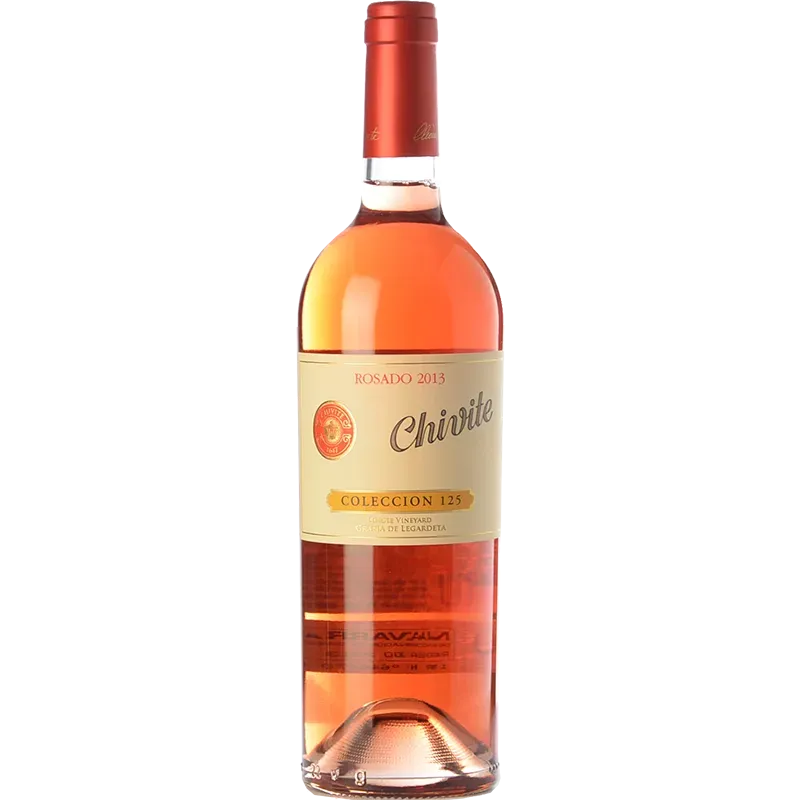
Chivite Colección 125 Rosado · 2023
If you're looking for a denomination in Spain with a tradition in producing rosés, it's definitely Navarra and the Chivite family, the best benchmark. Chivite was founded as a winery in 1647 and figures among the most historic dynasties in Spain. The Colección 125 range was released onto the market in 1985 to commemorate 125 years since they first started exporting in 1860, and the one which best showcases their expertise. They are true masters. In reds, whites, and naturally rosés. Chivite must be credited with having dignified the art of making rosés. Chivite's rosé is one of Spain's finest, a rosé with considerable personality, not simply fermenting in barrel but maturing for months on end on its lees in French oak barrels. Besides its beautiful colour, between salmon pink and ready-to-eat apricot, it's an elegant and refined wine, with a notably balsamic nose. Swirl it around in the glass and you'll see how it arouses aromas of cumin, black liquorice and sandalwood, mixed with earthy notes, crystallised fruit (redcurrants, pomegranate, raspberries), a gentle perfume of dried flowers and some buttery touches in the background. Really unusual: there's something on this nose reminding us of sparkling wines, Champagnes —but no bubbles, of course. Quite fascinating, and interesting too, because the grapes producing this rosé have nothing to do with the ones normally used in the manufacture of those French wines. Keeping it in the glass and letting the temperature rise a little, you'll notice how creamy it becomes and all the new nuances that appear, so subtle and so well interwoven that it's difficult to describe them, but you could spoon them out like a dessert! On the palate it offers a fresh and meaty attack, voluminous, dry, rather creamy on the entry — even more so as it starts to warm up — and now you can certainly detect an undertone of damp wood and notes of lightly toasted dried nuts and fruit from that barrel-ageing. Everything in just the right amount. A balanced and harmonious ensemble, which finishes smoothly and persistently. Back again, that initial Champagne-flavoured hint and aniseed background. A rosé with plenty of character, to enjoy at a leisurely pace.
Salmon, Clean, Bright
Fruit aromas, Red fruit, Cherries, Peach, Sloes, Toasty notes, Smoky notes, Spicy notes
With body, Voluminous, Good acidity, Balanced, Long, Persistent
Meat rice dishes, Rice with fish, Pasta with cheese, Oily fish, Grilled shellfish, White meats, Pigs feet, Hearty dishes, Mushroom pasta, With a good book
Serve between 10ºC and 12ºC
About the vineyard[+]
Navarre: Crossroads of Cultures and Winemaking Navarre's winemaking heritage is as old as the very mountains that adorn its landscape. Located in the north of Spain, Navarre has historically been a land of encounters between different cultures, and this is reflected in the rich diversity of its wines. If you are looking to experience the magic of Navarrese wine, you are in the right place. During the Roman Empire vine cultivation was widespread throughout this region, but it was especially during the Middle Ages, as Navarre became a powerful kingdom in its own right, that its wines became more famous. Pilgrims, passing through the area on their Way to Santiago, tasted the wine and, recording comments in their diaries, described it as "excellent". Rosés of Legend If there is one thing that has established Navarre on the world wine map, it is its rosés. These wines, with their vibrant hues and fresh character, are the perfect expression of Navarrese wine. Native and Foreign Grapes Navarre has traditionally been known as Spain's great rosé wine producer, but nowadays the situation has changed with a gradual tendency to move over to the production of quality red wines. Although historically the Garnacha has been the most popular variety, over recent years, particularly in its southern zone the Tempranillo grape has been planted and now exceeds the surface area of Garnacha. Other grapes chosen for planting that are giving highly satisfactory results are Cabernet Sauvignon, Merlot and Chardonnay. A Terroir of Contrasts From the Atlantic influence of the north to the more arid climate of the south, Navarra offers a range of microclimates that result in wines of unparalleled complexity. From north to south, Navarre could be described as resembling a small country: the Pyrenees form a border with France to the north, while in the central part, the slightly undulating ground supports cereal fields, market garden produce and vineyards, and to the south, there is a vast semi-arid area through which the River Ebro flows. This means that the DO is divided into 5 sub-regions lying to the south of Pamplona, although they generally share a continental climate (with an Atlantic influence in the northern sub-zones) and brownish-grey limestone soils that are poor in organic matter. These are the sub-regions: Valdizarbe, Tierra Estella, Baja Montaña, Ribera Alta and Ribera Baja. Our Navarrese Wine Curation We work side by side with family-owned wineries, cooperatives and cutting-edge producers in Navarra to bring you a selection that embodies the essence and diversity of this very special region. Each bottle is a direct passport to the vineyards of Navarre.