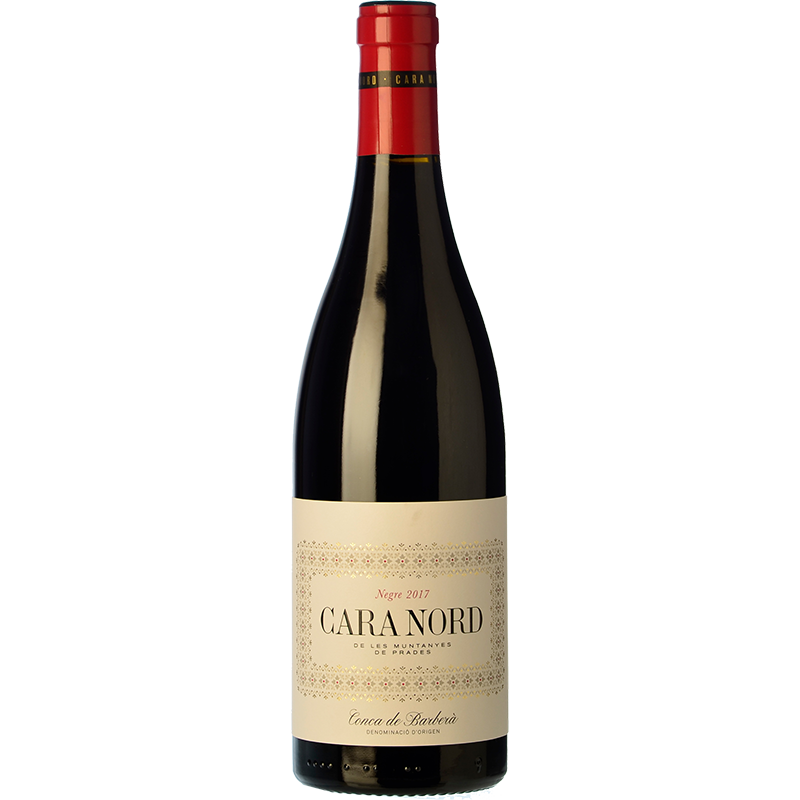
- Vintage
- 2023
- Region
- Conca de Barberà / Spain
- Grape
- Garnacha, Syrah, Monastrell
- Type
- red
- ABV
- 13%
- Volume
- 75cl
- Aging
- 6 months
- Production
- Traditional
- Barrels
- French oak
- Material
- Stainless steel, Cement
Cara Nord Negre · 2023
The Cara Nord (meaning 'the north face of a mountain' in Catalan) wine is a coupage of Grenache, Syrah, and Garrut (Monastrell) varieties, grown in different soils — chalky, clay, slate — combining old vines with younger ones. Most of the vines were planted in the year 2000 at a height of between 700 and 800 metres, in the area of Vimbodí i Poblet. The grapes undergo cold maceration before fermenting at controlled temperatures in stainless steel tanks with native yeasts. The finished wine is then stood to age in different-sized French oak barrels for five or six months before standing in underground concrete tanks for a further five months. Its captivating aromas remind us of eucalyptus and bay leaves (aromas which grow on decantation), soil and ash, juicy wild fruits, scrub-bush, dry flowers, and pepper; somewhat reminiscent of Rhône wines. Year after year, the more primary aromas move aside as the wine gains in complexity and depth; it becomes slightly bitter but still retains its fruitiness. Clear notes of cherry and ash mix with soothing balsamic hints, which are almost medicinal. Juicy and medium-bodied on the palate, with fine tannins and a little minerality, this wine is a very pleasant drink, and easy to interpret. The Cara Nord winery does not include the Trepat, the most well-known variety in the D.O. Conca de Barberà appellation, in this coupage but still achieve a fresh wine with sensations of cold spices.
Eucalyptus, Bay, Ash, Wild fruits, Dried flowers, Pepper
Medium-bodied, Fine tannins, Mineral, Pleasant, Juicy
Game terrine, Duck with red fruits, Spicy grilled swordfish
Serve between 14ºC and 15ºC
Decanting is recommended
About the vineyard[+]
In keeping with many Spanish wine-growing regions, after the Arab involvement, it was the monasteries that gave an impetus to the cultivation of vines. In this region in particular, the impressive Monasterio de Poblet was responsible for the reintroduction of vine growing. Another important point is that this was the district where in 1894, and as a direct result of wanting to restore vines after the phylloxera epidemic, the community's first wine-producing cooperative was established. Today the region boasts as many as six splendid cooperatives with buildings constructed at the beginning of the 20th Century in the modernist style. The DO Cava allows this product to be made here, along with base wine for other Cavas produced in the region, and a large number of the grapes grown are destined for this purpose. Even so, many wineries have decided to opt for creating quality still wines using foreign varieties blended with indigenous ones. The locally-grown, native Trepat grape is especially important in the production of characterful rosés, apart from being the base for many rosé Cavas. Located in the north of Tarragona province (Mediterranean climate) and bordering on the Lleida plain (Continental climate), the region receives protection from the mountain ranges that filter the influences of the two climates, thereby obtaining the best of both. The soil lacks any calcareous content and there is a marked contrast in the day and night-time temperatures, assuring the quality of the grapes.