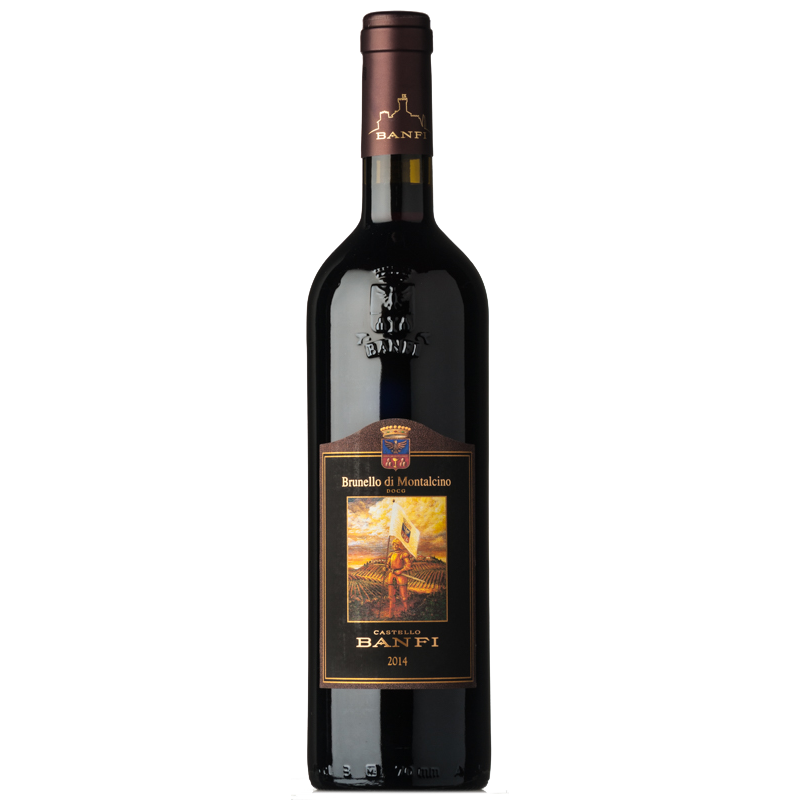
- Vintage
- 2020
- Region
- Brunello di Montalcino DOCG / Italy
- Grape
- Sangiovese
- Type
- red
- ABV
- 13.5%
- Volume
- 75cl
- Aging
- With Ageing
- Production
- Traditional
Banfi Brunello di Montalcino · 2020
Since 1978 Castello Banfi has embodied the largest project in Tuscany which has reconciled terroir and technological innovation. Founded by two Italian-American brothers John and Harry Mariani in the late 1970s, the winery quickly became an empire of Italian wine, with mind-boggling numbers: about 10 million bottles produced each year and over 800 hectares of property. Castello Banfi has thus fully acquired the role of ambassador in the world of Italian and Tuscan excellence in particular. The style, centred on the enological correctness of the product, has always embraced the best compromise between identity and modern taste. In this sense, the winery has certainly been able to interpret times and seasons, masterfully combining sometimes opposing needs. As a result, production has expanded enormously, reaching all the most significant areas of Tuscany. Among these Montalcino certainly stands out, where the winery still has its headquarters, in Poggio alle Mura, near the wonderful castle overlooking the small village. Brunello is perhaps the most direct and clean expression of the winery’s style. It comes from different vineyards, located between 200 and 350 metres above sea level, and benefits from ageing in wood which is made up of 70% large barrels and 30% barrique, a clear indication of the modernising orientation of the product.
Ruby red, Violet glints
Jammy fruit, Ethereal, Expressive, Mineral, Cinnamon, Cocoa, Animal notes
Fresh, Well-integrated tannins, Enveloping, With body, Persistent
Wild boar terrine, Duck ravioli, Stuffed quail, Beef entrecôte, Beef shank
Serve between 16ºC and 18ºC
About the vineyard[+]
Buy Brunello di Montalcino Online — Delivered to the UK Brunello di Montalcino is Italy's most prestigious red wine — a 100% Sangiovese DOCG from the hilltop town of Montalcino in southern Tuscany. It is one of the longest-lived wines in the world, built for the cellar but approachable with a few years of bottle age. Vinissimus stocks a curated range from benchmark producers, with delivery across the UK. What is Brunello di Montalcino? Brunello is made entirely from Sangiovese — known locally as Brunello — grown within a tightly defined zone around Montalcino, about 40 kilometres south of Siena. It was one of the first four wines awarded DOCG status in Italy in 1980, the country's highest classification for quality and origin. The modern version of Brunello was developed in the 1880s by Ferruccio Biondi-Santi, who isolated a specific Sangiovese clone and aged it for over a decade in large oak barrels. That approach — long ageing, pure Sangiovese, no blending — remains the foundation of the appellation today. What does Brunello di Montalcino taste like? Brunello is not an easy wine when young. It is structured, tannic and austere, with high acidity that can seem harsh before the wine has had time to open. With age it develops into something complex and layered: dried cherry, leather, tobacco, iron, dried roses and earthy mineral notes. The finish is long and precise. It is one of the few Italian reds that ages comparably to top Bordeaux or Burgundy — serious bottles from good vintages can evolve for 20 to 30 years. Brunello di Montalcino ageing requirements The DOCG sets strict minimum ageing rules: Brunello di Montalcino: minimum five years total ageing before release, including at least two in oak and four months in bottle Brunello di Montalcino Riserva: minimum six years total, with additional time in both oak and bottle This means the youngest Brunello on the market is always at least five years old from harvest. Releases are typically available in two waves — the standard in the fifth year, the Riserva a year later. Key producers in this selection The range at Vinissimus covers the main reference points for the appellation: Biondi-Santi: the founding family of modern Brunello. Their Riserva is one of the most collectable Italian wines in existence. Banfi: one of the largest estates in Montalcino, known for consistent, accessible Brunello at a relatively approachable price point for the appellation. Fonterenza: a small, biodynamic estate run by two sisters. One of the most sought-after natural wine producers in Montalcino. Brunello di Montalcino and food Brunello needs food with weight and depth to match its structure: Bistecca alla Fiorentina — the classic Tuscan pairing, T-bone grilled over wood Slow-roasted lamb or venison Wild boar ragù with pappardelle Aged Pecorino or Parmigiano Truffle-based dishes Avoid lighter food — the tannins and acidity will overwhelm anything delicate. Rosso di Montalcino — the entry point If Brunello is out of budget or you want something to drink now rather than age, Rosso di Montalcino is the answer. Made from the same Sangiovese in the same zone, it has shorter ageing requirements and is released earlier. It shares the character of Brunello at a lower price and with less need for cellaring. FAQ What grape is Brunello di Montalcino made from? 100% Sangiovese, known locally as Brunello. No blending is permitted under DOCG rules. How long does Brunello di Montalcino age for? A minimum of five years before release for the standard version, six for the Riserva. Good bottles can continue ageing in the cellar for 20 years or more. What is the difference between Brunello and Rosso di Montalcino? Both come from the same grape and zone. Rosso has shorter ageing requirements, is released earlier and is priced lower. It is the more accessible entry point to the Montalcino style. What food pairs with Brunello di Montalcino? Grilled and roasted red meats, wild boar, venison, aged hard cheeses and truffle dishes. It needs bold, rich flavours to match its structure and tannins. Is Brunello di Montalcino worth the price? For serious wine drinkers and collectors, yes. It is one of the few Italian reds that ages and evolves comparably to top Bordeaux. For everyday drinking there are better-value options — Rosso di Montalcino being the obvious starting point.